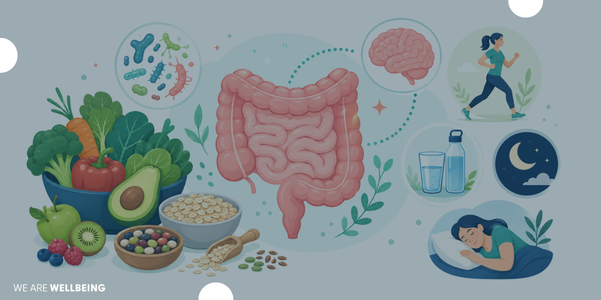
Gut health has become one of the biggest wellbeing topics in recent years — and for good reason.
Our digestive system does far more than simply process food. It plays an important role in nutrient absorption, immune function, energy levels and communication with the brain. Increasingly, researchers are also exploring the relationship between our gut microbiome and wider physical and mental wellbeing.
The good news is that supporting gut health doesn’t need to involve expensive supplements, restrictive diets or the latest wellness trend. Some of the most effective strategies are surprisingly simple.
What do we mean by “gut health”?
When we talk about gut health, we’re generally referring to how effectively the digestive system functions and the health of the microorganisms living within it.
Our digestive tract contains trillions of microorganisms, including bacteria, fungi and other microbes. Together, these are known as the gut microbiome.
Far from being unwanted passengers, many of these microbes perform useful functions. They help break down components of food that we cannot digest ourselves, interact with our immune system and produce compounds that can influence other parts of the body.
There isn’t one single definition of the “perfect” microbiome. However, having a diverse and resilient community of gut bacteria appears to be associated with good health.
Fibre: fuel for your gut
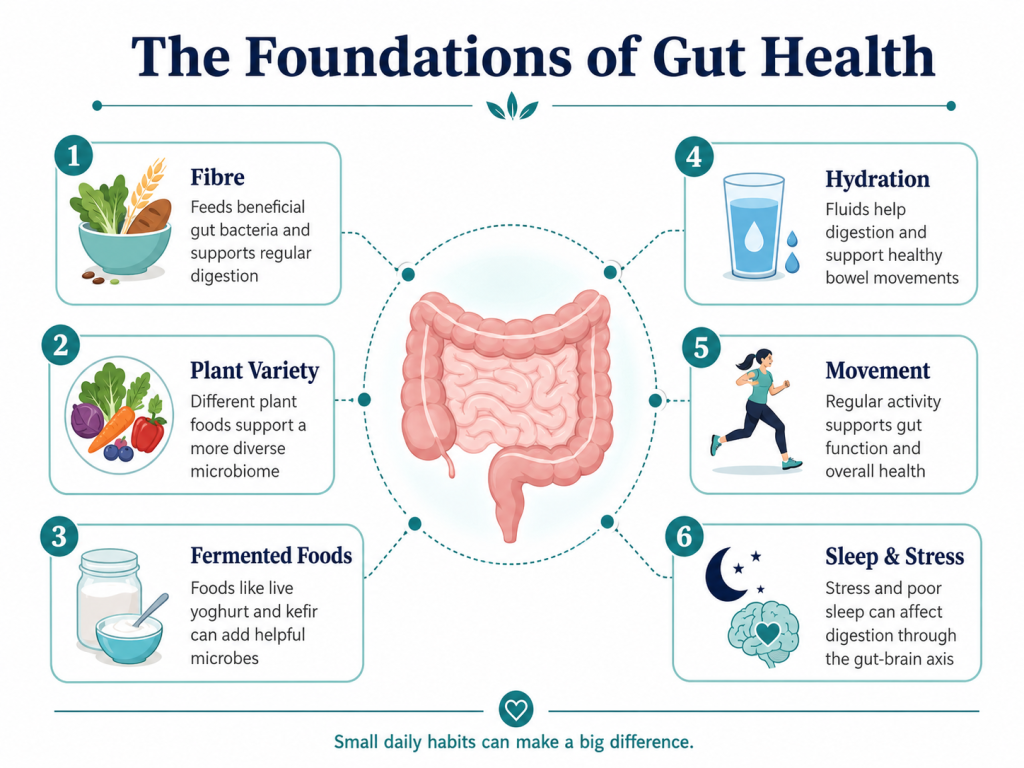
One of the best things we can do for our digestive health is to eat enough fibre.
Fibre is found in plant foods such as vegetables, fruit, whole grains, beans, lentils, nuts and seeds.
Some types of fibre travel through the digestive system relatively intact until they reach the large intestine. Here, gut bacteria can ferment them and produce substances called short-chain fatty acids, which help support the cells lining the gut.
UK adults are generally advised to aim for around 30 grams of fibre each day.
However, many people consume considerably less than this.
Simple ways to increase fibre include choosing wholegrain bread and cereals, adding beans or lentils to meals, eating fruit as a snack and including vegetables with lunch and dinner.
If your current diet is low in fibre, increase it gradually and drink plenty of fluid. Increasing fibre too quickly can sometimes lead to temporary bloating or wind.
Variety matters too
Gut health isn’t only about the amount of fibre we eat — variety is important too.
Different microorganisms thrive on different plant fibres and compounds. Eating a broad range of plant foods therefore provides a wider selection of nutrients for the microbiome.
Plant foods include much more than vegetables. Fruit, beans, lentils, chickpeas, whole grains, nuts, seeds, herbs and spices all count towards dietary variety.
Rather than eating exactly the same breakfast, lunch and dinner every day, regularly rotating your plant foods can be a simple way to increase diversity.
Prebiotics, probiotics and fermented foods
Two words that frequently appear in conversations about gut health are prebiotics and probiotics.
Prebiotics are particular fibres that beneficial gut microorganisms can use as food. Foods containing prebiotic fibres include onions, garlic, leeks, oats, beans, lentils and bananas.
Probiotics, on the other hand, are live microorganisms that may provide a health benefit when consumed in adequate amounts.
Some fermented foods naturally contain live microorganisms. Examples can include live yoghurt, kefir, kimchi and sauerkraut.
These foods can form part of a healthy diet, but they shouldn’t distract us from the fundamentals. For most people, eating plenty of varied plant foods remains one of the most important steps towards supporting gut health.
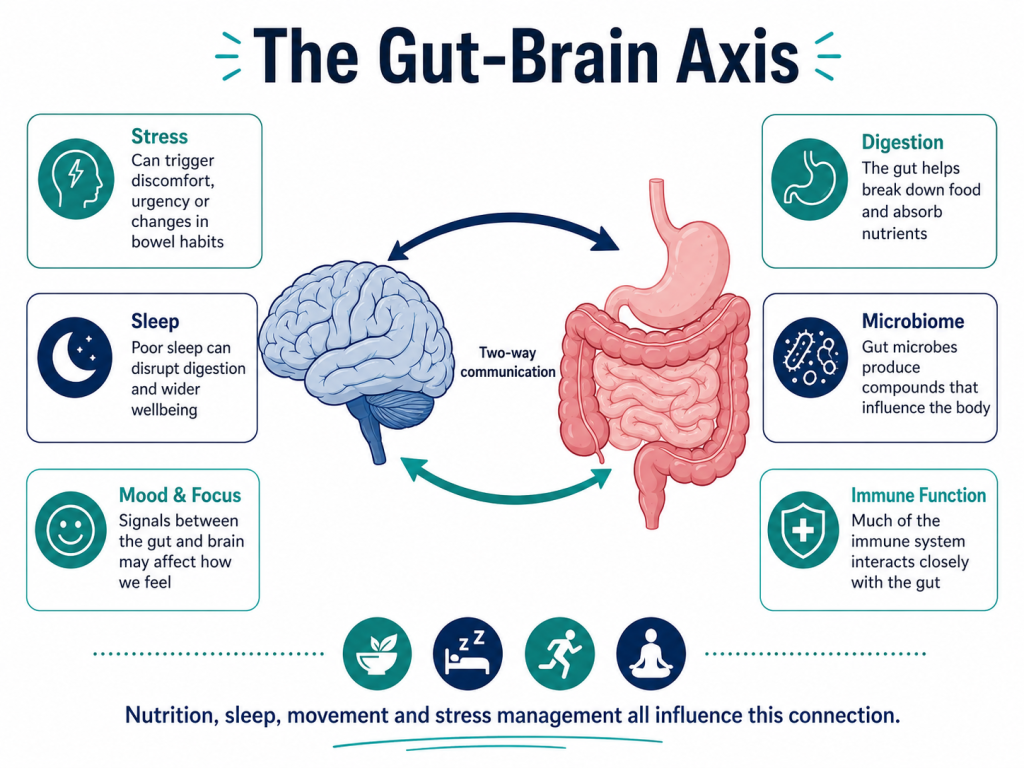
The gut-brain connection
One particularly interesting area of research is the relationship between our digestive system and our brain.
The two communicate through what is often referred to as the gut-brain axis.
Many people have experienced this connection first-hand. Stress before an important presentation might produce “butterflies”, nausea or an urgent trip to the bathroom.
Periods of prolonged stress can also influence digestion, bowel movements and sensitivity within the digestive system.
At the same time, the gut communicates back to the brain through nervous-system, hormonal and immune pathways.
Researchers continue to investigate how these interactions might relate to mental health. While exciting, it is important not to exaggerate the evidence. Improving gut health should complement — rather than replace — appropriate treatment and support for mental health difficulties.
Gut health and the workplace
Gut health may not immediately seem like a workplace wellbeing issue, but our daily working environment can significantly influence it.
Long periods of sitting, irregular meals, high stress levels, insufficient sleep and reliance on highly processed convenience foods can all affect our digestive wellbeing.
Organisations can support healthier behaviours by encouraging proper lunch breaks, providing access to healthy food choices, promoting physical activity and creating a working culture in which employees can manage stress and recovery effectively.
Education is also important.
Understanding how nutrition, sleep, physical activity and stress interact can help employees make realistic choices that support both their short-term energy and longer-term health.
Five simple ways to support your gut
If you want somewhere practical to start:
- Aim for around 30g of fibre per day.
- Eat a wide variety of vegetables, fruits, whole grains, beans, nuts and seeds.
- Consider including fermented foods such as live yoghurt or kefir.
- Stay physically active and adequately hydrated.
- Pay attention to stress, sleep and recovery as well as nutrition.
Gut health doesn’t require perfection. Like most areas of wellbeing, small positive behaviours repeated consistently are more valuable than occasional extreme changes.
Bring health and wellbeing education into your workplace
At We Are Wellbeing, our interactive workplace wellbeing webinars help employees better understand their health and, most importantly, give them practical strategies they can use in everyday life.
We offer a wide range of engaging webinars covering topics including nutrition, gut health, physical health, mental health, stress, sleep, healthy eating, physical activity and wider workplace wellbeing.
Whether you’re planning a wellbeing campaign, awareness day or year-round programme, we can help you deliver practical, evidence-informed education that engages your workforce.
Want to bring a wellbeing webinar to your organisation? Contact We Are Wellbeing today to discuss your requirements and book a session for your employees.