Skin cancer is one of the most common forms of cancer in the UK, yet many cases may be prevented by reducing exposure to harmful ultraviolet radiation. Awareness is not about avoiding the outdoors; it is about enjoying the sunshine safely, understanding your personal risk and recognising changes in your skin as early as possible.
Rates of melanoma, the most serious form of skin cancer, have increased considerably. Cancer Research UK reports that melanoma incidence rates have risen by approximately 26% over the past decade, with around 20,000 UK cases now being diagnosed in a single year. However, survival is high when melanoma is identified and treated early.
Understanding skin cancer
Skin cancer is generally divided into two main categories: melanoma and non-melanoma skin cancer.
Non-melanoma skin cancers, including basal cell carcinoma and squamous cell carcinoma, are more common and are generally less likely to spread to other parts of the body. Melanoma is less common but can be more serious because it may spread if it is not detected and treated promptly.
Ultraviolet radiation from the sun and sunbeds can damage the DNA in skin cells. This damage can build up over time, meaning that sunburn experienced during childhood, holidays or years of outdoor work may contribute to future risk.
A suntan should not be viewed as a sign of health. The Health and Safety Executive explains that tanning is a visible sign that the skin has already been damaged by UV radiation.
Know what is normal for your skin
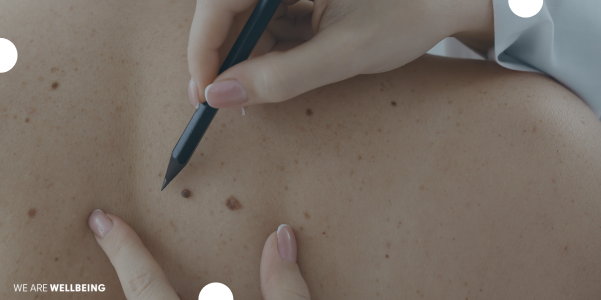
Regularly checking your skin can help you notice new marks or changes to existing moles. Try to check your entire body, including less visible areas such as your scalp, back, the soles of your feet and between your toes.
When checking a mole, remember the ABCDE approach:
A – Asymmetry: One half looks different from the other.
B – Border: The edges appear uneven, blurred or irregular.
C – Colour: The mole contains different colours or has changed colour.
D – Diameter: The mole is becoming larger, particularly if it is more than approximately 6mm.
E – Evolving: The mole is changing in size, shape, colour or sensation.
You should also seek medical advice about a new or changing growth, a sore that does not heal, or an area of skin that repeatedly bleeds, crusts, itches or becomes painful. Non-melanoma skin cancer can sometimes appear as a persistent lump, scaly patch or damaged area of skin.
Protecting yourself from UV exposure
Sun protection is important even in the UK. UV levels can be strong when the weather feels cool, and UV radiation can still affect the skin through light cloud.
Practical protection includes:
- Spending time in the shade, particularly when the sun is strongest.
- Wearing a hat, sunglasses and clothing that covers exposed skin.
- Using a broad-spectrum sunscreen with a suitable SPF and strong UVA protection.
- Applying sunscreen generously and reapplying it regularly, particularly after swimming, sweating or towel drying.
- Avoiding deliberate tanning and sunbeds.
- Checking the daily UV Index rather than relying only on temperature or visible sunshine.
The UV Index measures the potential for ultraviolet radiation to harm the skin and eyes. The higher the number, the less time it can take for damage to occur.
Employers should also consider the wellbeing of outdoor workers. Access to shade, appropriate clothing, sunscreen, drinking water and sensible scheduling can help employees reduce unnecessary exposure.
Early action matters
Most skin changes will not be cancer, but they should not be ignored. Contact your GP if you notice a suspicious or changing mole, growth or patch of skin. Taking photographs can also help you monitor changes over time.
Skin Cancer Awareness is a reminder that prevention and early detection are everyone’s responsibility. Protect your skin, understand what is normal for you and take action when something changes.
Book a Skin Cancer Awareness Webinar
Help your employees understand the risks of skin cancer, recognise potential warning signs and make safer choices when spending time outdoors.
Our Skin Cancer Awareness Webinar provides practical, accessible guidance on UV exposure, sun protection, personal risk factors and the importance of early detection.
To find out more or book a session for your organisation, contact We Are Wellbeing at hello@wearewellbeing.co.uk or call 0113 460 1684.