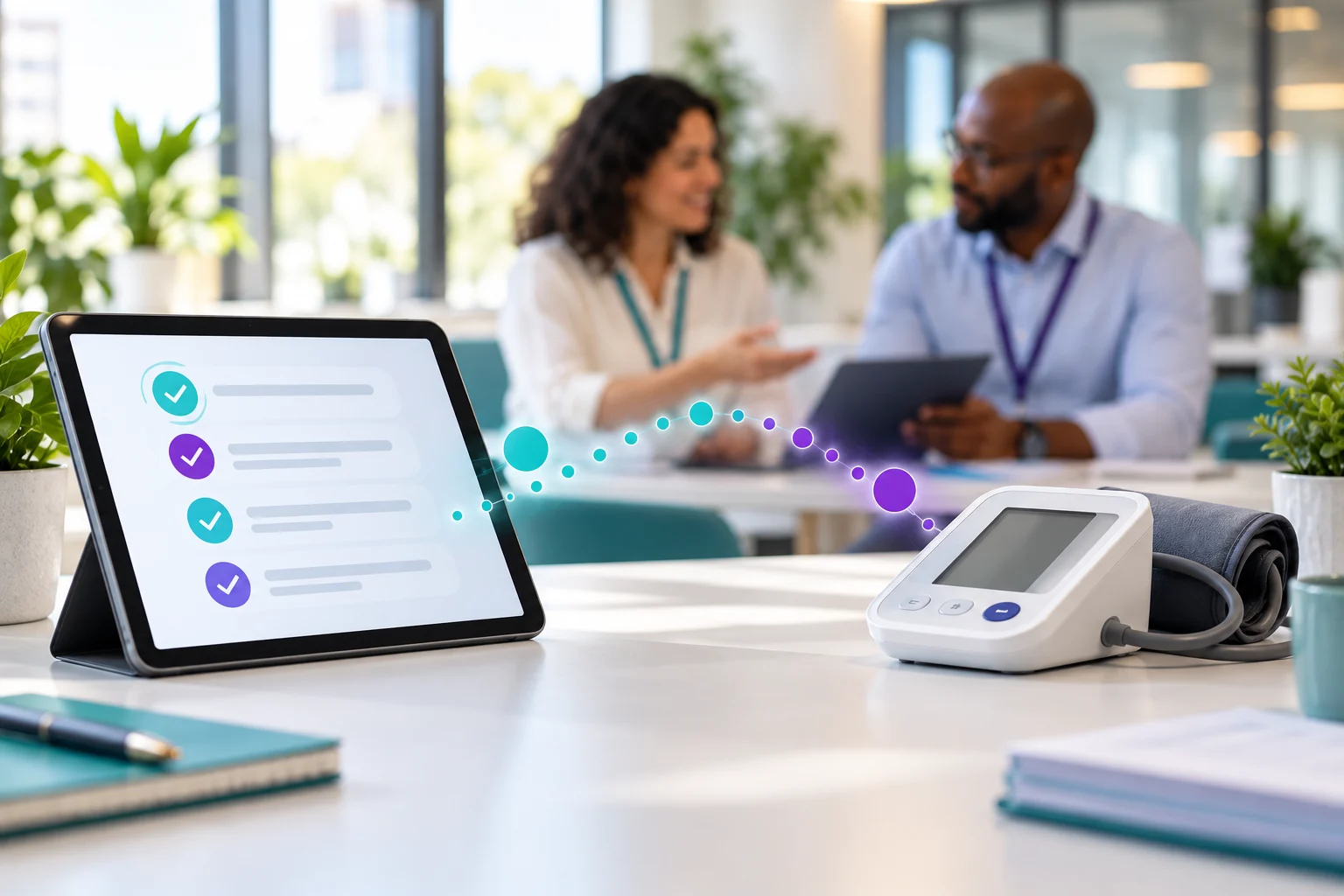
Most organisations already collect some wellbeing data. There's the annual staff survey, perhaps a pulse check after a restructure, and sometimes an on-site health screening day. The problem is that these usually sit in silos: the survey with HR, the health results in a report that's read once and filed. Used together, they tell a far more useful story.
Two halves of the same picture
Survey data tells you how people feel: stress, workload, sleep, how supported they feel by their manager, and whether they'd use the wellbeing offer you already have. Health assessment data tells you what's happening physically: blood pressure, body composition, cholesterol, glucose, lung function and resting heart rate.
On its own, each has blind spots. A survey might show that a third of staff feel exhausted, but not whether that's linked to anything measurable. A health screen might show raised blood pressure across a team, but not why. Put them side by side and patterns emerge, and patterns are what let you act with confidence rather than guesswork.
What combining the data reveals
Here are the kinds of insight that appear when the two are read together:
- Shift patterns and metabolic health. Night workers reporting poor sleep may also show higher average glucose or body composition readings than day colleagues. That points to practical fixes, such as better food options on shift or smarter rota design, rather than a generic webinar.
- Stress that's showing up physically. If a department reports heavy workload pressure and also has a cluster of borderline or high blood pressure readings, there's a strong case for looking at resourcing, not just resilience training.
- Gaps between perception and reality. People often rate their own health as good while their results suggest otherwise. That gap is a powerful prompt for engagement because it makes the message personal.
- Life-stage needs. Looking at results by age band shows where menopause support, heart health awareness or musculoskeletal programmes will have most impact.
Anonymity comes first
None of this works without trust. Employees need to know their individual results stay with them and that the organisation only ever sees group-level findings. Good practice is to report only on groups of five or more, keep survey responses anonymous, and be clear up front about how the data will be used. Handled well, screening itself signals that the employer genuinely cares, and participation tends to grow year on year.
Turning insight into action
Data only has value if it changes something. A practical cycle looks like this:
- Measure. Run a short lifestyle and wellbeing survey alongside on-site health checks, so both data sets cover the same people at the same time.
- Combine and prioritise. Look for where the two overlap and pick two or three priorities rather than trying to fix everything at once.
- Act. Match interventions to the findings: manager training where support scores are low, targeted health coaching where risk markers cluster, and changes to the working environment where the workplace itself is the issue.
- Re-measure. Repeat after 12 months. Comparing like with like shows what's working and builds the business case for continued investment.
The payoff
Combined data moves wellbeing from a nice-to-have to an evidence-led part of how the business runs. It helps HR and reward leaders spend budget where it makes a real difference, gives senior leaders measurable outcomes, and shows employees that their feedback leads to visible change.
At We Are Wellbeing, our Essential Health Check pairs a 30-minute on-site health assessment with a lifestyle survey. Every employee gets an instant personal report, and you receive an anonymised company health report that brings both sides together. To find out what your data could tell you, get in touch at wearewellbeing.co.uk.